
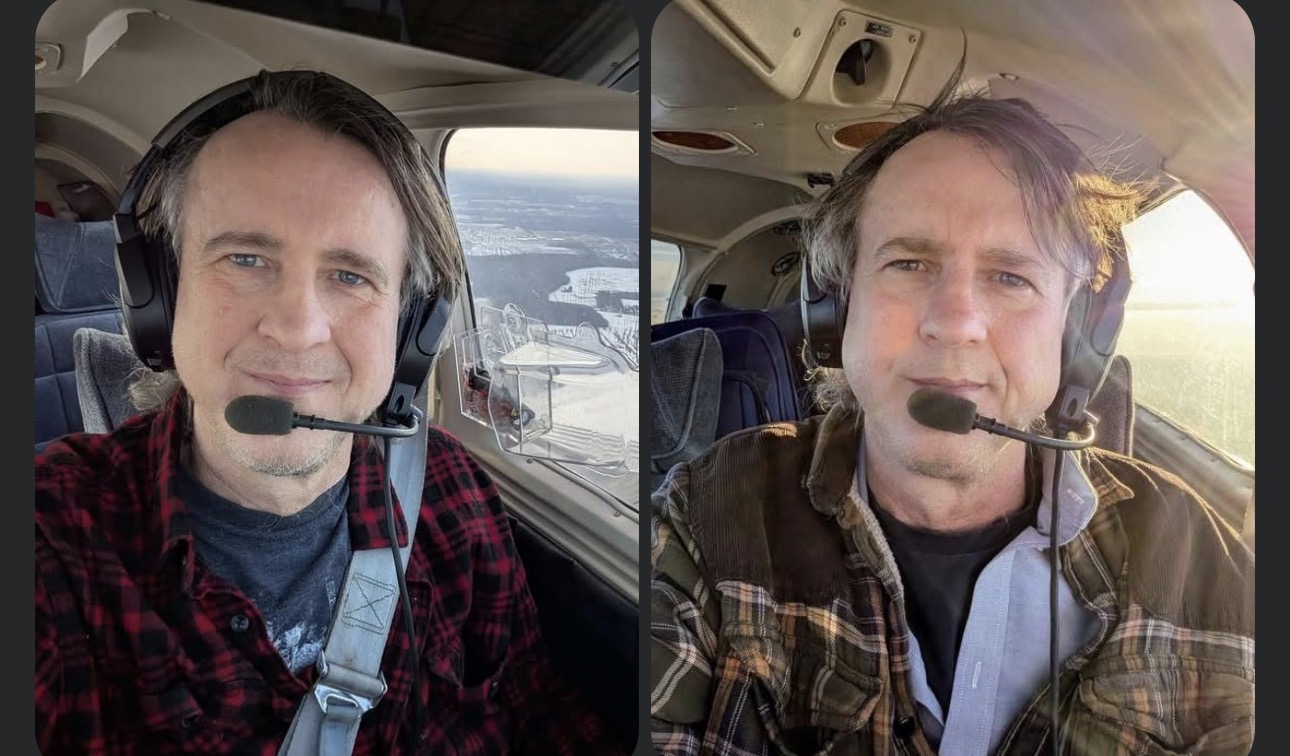
David S. Wade Killed in Lawrence County Plane Crash: Salisbury Pilot Dies in Mooney M20J Aircraft Crash Near Hanging Rock, Ohio – FAA & NTSB Investigate.
Tragic Loss Over Ohio: Remembering David S. Wade
The quiet skies over Lawrence County, Ohio, turned tragic on a recent afternoon, claiming the life of a beloved Maryland pilot and sending shockwaves of grief back to his hometown of Salisbury. David S. Wade, a seasoned aviator and cherished member of his community, was identified as the sole victim of a devastating small plane crash near the small unincorporated village of Hanging Rock.
As the sun began its descent on what had started as an unremarkable day, emergency dispatchers received reports of a downed aircraft. The subsequent confirmation of Wade’s death has left family, friends, and fellow aviation enthusiasts grappling with a profound sense of loss. The crash, which occurred under circumstances still under investigation, serves as a somber reminder of the fragility of life and the sudden voids left in the wake of tragedy.
The Final Flight: Details of the Crash
According to the Ohio State Highway Patrol, the emergency call came in at approximately 2:20 p.m. local time. The location was a remote, wooded area in the Hanging Rock region, a rugged and picturesque part of Lawrence County situated very close to the Scioto County line. This area, known for its rolling hills and the nearby Ohio River, presents challenging terrain, though investigators have not yet determined if geography played a role in the incident.
Authorities confirmed that Wade was at the controls of a 1987 Mooney M20J aircraft, a high-performance, single-engine, four-seat airplane renowned in general aviation circles for its speed, fuel efficiency, and sleek aerodynamic design. Mooney aircraft, particularly the M20J model (often called the “201” for its 201-mile-per-hour cruise speed), are favored by long-distance private pilots. The aircraft was registered to Wade, and manifest logs indicated he was the only person on board at the time of the flight.
Witnesses in the Hanging Rock area reported hearing what sounded like engine sputtering followed by an unusual silence before the sound of impact echoed through the tree-lined hills. Emergency medical services (EMS), sheriff’s deputies, and fire rescue teams rushed to the scene, navigating difficult backroads to reach the wreckage. Despite their rapid response, the condition of the crash site left no hope for survival. David S. Wade was pronounced dead at the scene by the Lawrence County Coroner’s Office.
Who Was David S. Wade? More Than a Pilot
While the initial news reports focused on the factual elements of the crash—the time, the location, the aircraft—those who knew David S. Wade understand that his identity extended far beyond his pilot’s license. In Salisbury, Maryland, where Wade was a long-time resident, he was known as a man of quiet competence, warmth, and community spirit.
Friends recall Wade as someone who approached life with the same precision he brought to flying: methodical, passionate, and deeply respectful of the forces he worked with. He was not merely a recreational pilot; for Wade, aviation was a lifelong pursuit. He was known to frequent regional fly-ins, often volunteering to give young people their first ride in a small plane, hoping to inspire the next generation of aviators.
Outside of the cockpit, Wade was an active participant in the Salisbury civic scene. Neighbors describe him as the kind of person who would notice when someone needed help—whether shoveling a driveway, mentoring a young entrepreneur, or simply listening to a friend in distress. His sudden death has left a palpable emptiness in the community. Local church groups, business associations, and social clubs have all expressed their condolences, many sharing stories of Wade’s generosity and his quiet, unwavering integrity.
“The loss of David is not just the loss of a pilot, but the loss of a loved one whose presence carried meaning, warmth, and purpose,” one longtime friend stated, echoing the sentiments of many. For his family, the pain is indescribable. They have requested privacy but released a brief statement thanking first responders and asking for prayers as they navigate “an unimaginable nightmare.”
The Immediate Aftermath: A Scene of Grief and Investigation
In the hours following the crash, the Hanging Rock area became a focal point for both emergency response and official inquiry. The Ohio State Highway Patrol secured the perimeter, keeping curious onlookers and local media at a safe distance while federal authorities were notified.
By late afternoon, investigators from two major federal agencies were en route: the Federal Aviation Administration (FAA) and the National Transportation Safety Board (NTSB) . These two bodies work in tandem on general aviation accidents. The NTSB typically leads the investigation into the probable cause, while the FAA assists with regulatory and technical details.
The investigation process in a remote crash site like Hanging Rock is painstaking. Investigators will spend days, possibly weeks, meticulously mapping the debris field. The 1987 Mooney M20J will be examined piece by piece. They will look for signs of mechanical failure, such as engine separation, control surface jams, or fuel system anomalies. They will also analyze weather data from the time of the crash, air traffic control communications, and Wade’s recent maintenance records and flight experience.
A key question will be whether Wade issued any distress calls. Preliminary reports from the Ohio State Highway Patrol suggested no mayday call was received by regional air traffic control, though that does not rule out a sudden, catastrophic emergency that left no time for radio communication.
The Challenge of General Aviation Safety
The tragedy of David S. Wade brings into focus the broader context of general aviation safety. Unlike commercial airlines, which operate under stringent, multi-layered safety protocols and have an exceptional safety record, general aviation—which includes private planes like the Mooney M20J—carries higher statistical risks. According to NTSB data, general aviation accidents account for the vast majority of aviation fatalities in the United States each year, though the number has been steadily declining due to improved technology and training.
The Mooney M20J is generally considered a safe and reliable aircraft when properly maintained. However, its performance capabilities mean it requires a skilled pilot, particularly in emergency situations. The rugged terrain near the Scioto County line, characterized by sudden elevation changes and dense forest, offers few safe landing options. An engine failure at low altitude in such an environment can leave a pilot with no viable alternatives.
Investigators will explore whether the crash resulted from mechanical failure, pilot error, weather, or a combination of factors. Until the FAA and NTSB release their preliminary and final reports—a process that can take 12 to 24 months—the exact sequence of events will remain speculative. For Wade’s loved ones, the waiting is another layer of anguish, as unanswered questions compound the raw grief of his sudden absence.
Community Response: Mourning Across State Lines
The tragedy has forged a sorrowful link between Lawrence County, Ohio, and Salisbury, Maryland. In Ohio, local residents near the crash site have expressed their sympathies, leaving small memorials of flowers and flags at the nearest road junction to the accident scene. “We don’t know who he was, but he was someone’s family,” said one Hanging Rock resident. “Our hearts break for them.”
Back in Salisbury, the reaction has been overwhelming. A candlelight vigil is being organized by friends at a local airport hangar, where Wade often kept his Mooney. Pilots from across Maryland’s Eastern Shore have announced plans for a “missing man” flyover in his honor, a traditional aerial salute to a fallen aviator.
Local flight schools have also spoken out, reminding student pilots of the risks and responsibilities of aviation while celebrating Wade’s dedication to safety and mentorship. One instructor noted, “David embodied the best of us. He was cautious, well-trained, and loved the skies. If this can happen to him, it reminds all of us to never take a single takeoff for granted.”
The Painful Reality: What Comes Next
In the days ahead, the Lawrence County Coroner’s Office will complete an autopsy as part of standard procedure. Once Wade’s remains are released, his family will begin the heartbreaking process of funeral arrangements. Friends have set up a memorial fund in his name, intended to support aviation scholarships for young people from Salisbury who dream of flight—a fitting tribute to a man who gave so much to his community.
Meanwhile, the NTSB will release a preliminary factual report within a few weeks, detailing the basic circumstances of the crash without assigning a cause. The final report, including a determination of probable cause, may take over a year. For those who loved David S. Wade, that timeline offers little comfort. They are left with the silence he left behind—a silence that is, as the original news noted, “heavy,” and a heartbreak that “reaches far beyond the crash site.”
A Final Tribute: Remembering the Man, Not Just the Tragedy
In times of sudden loss, it is natural to search for answers, to scrutinize the mechanical and the meteorological. But for those who truly knew David S. Wade, the legacy is not found in the wreckage near Hanging Rock. It is found in the lives he touched, the students he mentored, the friends he supported, and the quiet dignity he brought to every interaction.
As the Ohio State Highway Patrol closes its on-scene investigation and the FAA and NTSB continue their analytical work, the people of Salisbury, Maryland, and the wider aviation community are left with a singular, painful truth: Life can change in an instant. A routine flight over the hills of Lawrence County became a tragedy that has rippled across state lines.
May David S. Wade be remembered with honor. May his loved ones find strength, comfort, and peace in the days ahead as they mourn a life gone far too soon. And may his memory serve as a gentle reminder to all of us to cherish the ordinary days, for they are never truly ordinary.
Leave a Reply